
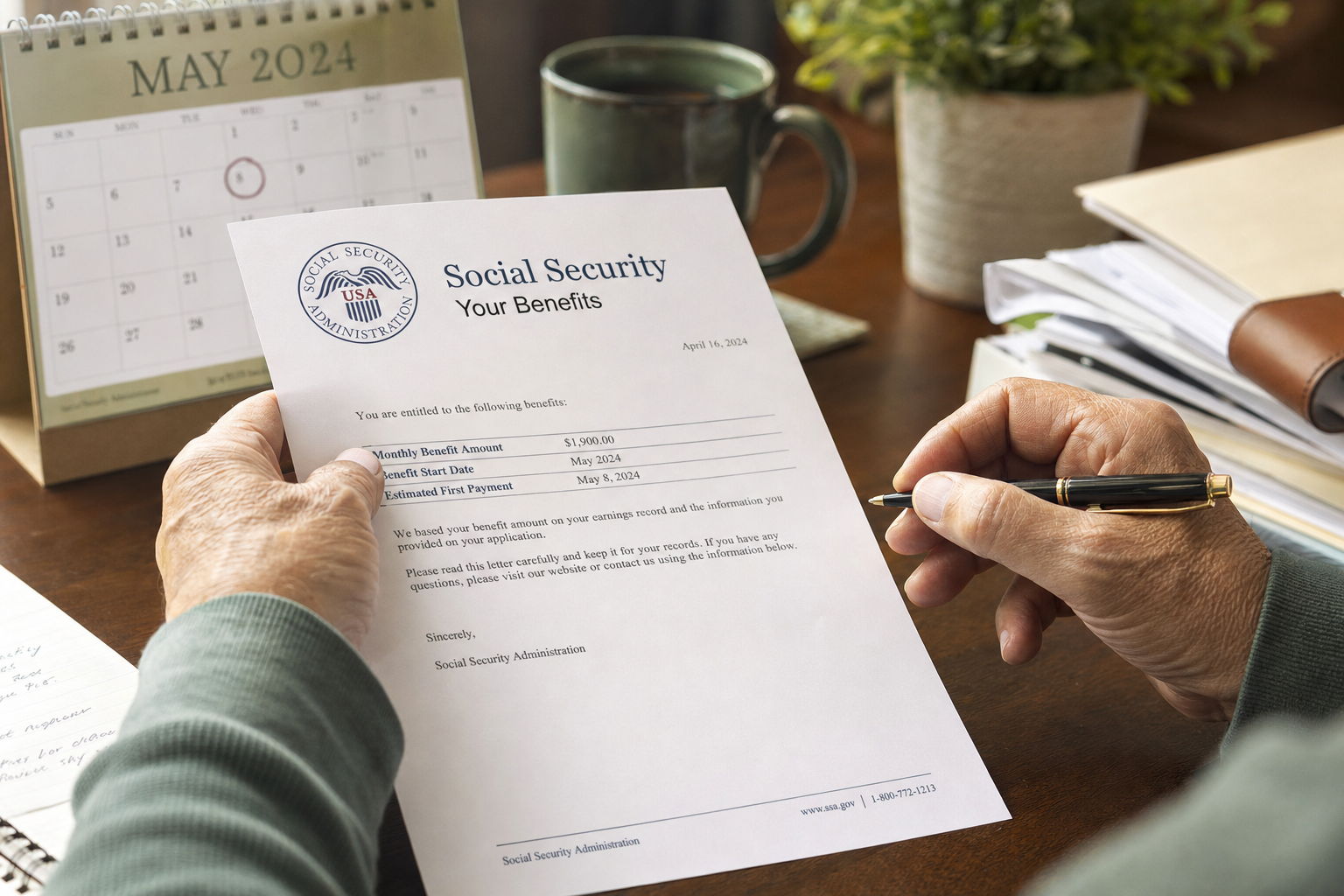
Deciding when to start Social Security is one of the biggest income decisions you'll make heading into retirement, and there is no single right answer that fits every person or every couple. You can claim as early as age 62, wait until your full retirement age, or delay all the way to age 70. Each choice permanently changes the size of your monthly check and how it fits into the rest of your retirement income plan.
The honest answer is that the best claiming age depends on your health, your other savings and income sources, whether you're married, and how long you expect to rely on that income. For many of the families we work with around the Philadelphia area, this decision is one piece of a larger retirement income conversation, not a standalone choice made in isolation.
This article walks through the main tradeoffs so you can have a more informed conversation with a financial advisor about your own situation.
Key takeaways
- Claiming before full retirement age generally results in a smaller monthly benefit for the rest of your life.
- Waiting past full retirement age increases your benefit through delayed retirement credits, up until age 70, when the increases stop.
- Married couples have extra decisions to weigh, including spousal benefits and, eventually, survivor benefits.
- There is no universal "correct" claiming age. It depends on your health, your other resources, and your goals.
- Social Security is one input into a retirement income plan, not the entire plan.
Understanding your claiming age options
Claiming early, as early as age 62
Age 62 is the earliest you can generally start Social Security retirement benefits. Claiming this early typically means a smaller monthly benefit than you'd receive by waiting, and that reduction is generally permanent. Some people choose to claim early anyway, often because they need the income sooner, have health concerns that make waiting less appealing, or have already stopped working and prefer certainty now over a larger check later.
Claiming at full retirement age
Full retirement age is set by the Social Security Administration based on the year you were born, and for most people retiring today it falls a bit later than age 65. Claiming at full retirement age gets you what's often called your "standard" benefit, without the early-claiming reduction and without the boost you'd get from delaying further.
Delaying benefits up to age 70
If you can afford to wait past full retirement age, your benefit generally continues to grow through what are called delayed retirement credits, up until age 70. After age 70, there's no additional benefit to waiting longer, so most people who delay stop at that point. Delaying can make sense for people in good health, with other income to draw on in the meantime, who want to maximize their lifetime Social Security income.
Spousal and survivor benefit considerations for married couples
Spousal benefits
When you're married, Social Security isn't just an individual decision. A lower-earning or non-working spouse may be eligible for a benefit based on their spouse's earnings record, in addition to (or instead of) their own. The timing of each spouse's claim can affect what's available to the other, which is why couples often benefit from looking at the decision together rather than separately.
Survivor benefits
When one spouse passes away, the surviving spouse may be eligible to step into a survivor benefit based on the deceased spouse's record. The choices made earlier, including when the higher-earning spouse claimed, can influence what that survivor benefit looks like later. For many couples, this is one of the most important and most overlooked pieces of the claiming decision, since it affects the income of whichever spouse lives longer.
How your claiming age shapes your retirement income plan
Your Social Security claiming age doesn't just affect one number on a statement. It affects how much you'll rely on savings and investments in the early years of retirement, how your income sources work together, and how much flexibility you have if the market or your health takes an unexpected turn. Some retirees use savings to "bridge" the years before claiming, so they can delay Social Security while still covering living expenses. Others prioritize claiming earlier for peace of mind and predictability.
Taxes can also be affected by how and when you draw income from different sources, including Social Security. This is a good area to review with a tax professional as part of your overall plan, since everyone's situation is different.
A short checklist worth thinking through with your advisor:
- What is your health and family longevity history?
- Do you have other income or savings to rely on in the meantime if you delay?
- Are you married, and if so, how does each spouse's claiming decision affect the other, now and after one spouse passes away?
- How does this decision interact with the rest of your retirement income plan, including any pensions, retirement accounts, or part-time work?
Common mistakes to avoid
- Assuming there's one "right" claiming age that applies to everyone.
- Deciding based only on today's cash flow, without looking at the full retirement income picture.
- Overlooking spousal and survivor benefit implications when married.
- Forgetting that an early claiming decision is generally permanent and hard to undo.
When to talk with us
Every family's situation is different, and the right claiming age for you depends on factors that don't show up in a general article like this one. If you're within a few years of retirement, or already retired and reconsidering your options, it's worth reviewing your specific numbers, health, and goals with a professional before you file. CDS Wealth Management works with people across the Philadelphia area, including through our retirement planning seminars in Ambler, Doylestown, and Northampton, PA, to help build retirement income plans that make sense for each household. We'd welcome the chance to schedule an introductory consultation with you to talk through your own situation.
Securities are offered through LPL Financial, Member FINRA/SIPC. Investment advice is offered through Global Retirement Partners, LLC, dba CDS Wealth Management Inc., a registered investment adviser and separate entity from LPL Financial. This article is educational in nature and is not a recommendation to take any specific action with your Social Security benefits or investments. Your own results will depend on your individual circumstances.
Frequently asked questions
What is the earliest age I can claim Social Security? Generally age 62, though claiming this early typically means a smaller monthly benefit than waiting would provide.
Is the reduction for claiming early permanent? Yes, generally. Claiming before your full retirement age typically results in a permanently reduced monthly benefit compared to waiting.
What is full retirement age? It's the age set by the Social Security Administration, based on your birth year, at which you're eligible for your full, unreduced benefit.
What are delayed retirement credits? They are increases to your benefit for each year you delay claiming past full retirement age, up until age 70.
Does it help to delay past age 70? No. The benefit increases from delaying generally stop at age 70, so there's typically no added value to waiting beyond that.
How do spousal benefits work? A spouse may be eligible for a benefit based on their partner's earnings record, and the timing of each spouse's claim can affect what's available to the other.
What happens to Social Security when a spouse passes away? The surviving spouse may become eligible for a survivor benefit based on the deceased spouse's record, which can be influenced by earlier claiming decisions.
Should my spouse and I claim at the same time? Not necessarily. Many couples benefit from coordinating their claiming ages rather than claiming at the same time by default.
Will my claiming age affect my taxes? It can, depending on your other income sources. This is worth reviewing with a tax professional as part of your broader plan.
How does Social Security fit into my overall retirement income plan? It's typically one of several income sources, alongside savings, retirement accounts, and possibly a pension. The right claiming age often depends on how it works together with everything else.
Sources
This article reflects general Social Security program concepts as published by the Social Security Administration. For the most current rules, your personalized benefit estimates, and to confirm details for your own situation, visit the Social Security Administration's website or your online my Social Security account, and speak with your financial advisor.